Your Attention Is Leaking — Here's How Creators Can Stop the Bleed
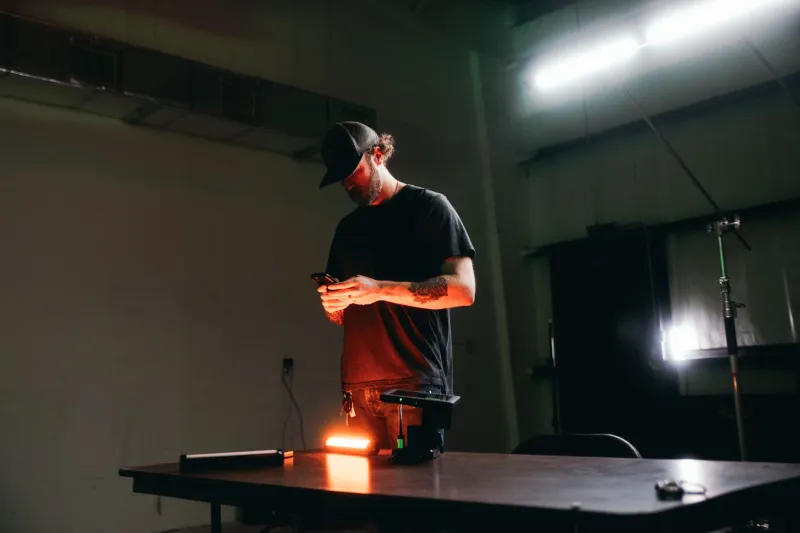
Let's start with a number: the average person checks their phone 96 times a day. For creators — people whose entire livelihood is tied to what happens on those screens — that number almost certainly runs higher. And every single one of those checks is a small withdrawal from the one resource that actually makes creative work possible: sustained attention.
We've gotten very good at talking about burnout. We've gotten pretty good at talking about algorithm anxiety and the pressure to post consistently and the soul-crushing math of impressions versus engagement. What we talk about less is the upstream problem — the way the whole architecture of the creator economy is quietly dismantling our ability to think deeply in the first place.
This is about that.
The Feedback Loop That Eats Your Work
Here's the thing about real-time metrics: they're designed to be compelling. The people who built these dashboards are not neutral parties. Every time you refresh your analytics, every time you check how a post is performing three hours after you published it, you're participating in a system that was explicitly engineered to keep you checking.
And that system is incompatible with deep creative work.
Deep creative work — the kind that produces something actually worth making — requires a mental state that researchers call flow. It's characterized by full absorption, reduced self-consciousness, and a kind of temporal distortion where two hours can pass and feel like twenty minutes. Flow is where your best ideas live.
You cannot be in flow and also be monitoring your notifications. These are neurologically incompatible states. Every time you tab over to check your numbers mid-project, you're not just losing thirty seconds. You're losing the thread — and it takes an average of twenty-three minutes to fully regain focused attention after an interruption. Do that math against your actual workday and see what's left.
The Approval Addiction Nobody Talks About
There's a subtler version of this problem that's harder to name: the way audience feedback starts to shape creative decisions before the work is even done.
You're writing something, or editing a video, or laying down a track, and somewhere in the back of your mind you're already imagining the comments. You're pre-testing your choices against an imagined audience response. You're making micro-adjustments in real time based on what you think will land.
This is not creative intuition. This is audience-capture dressed up as craft.
The irony is that the work that tends to resonate most deeply — the stuff that actually builds a real, lasting audience — is almost never the work that was optimized in real time. It's the work that was made with a kind of reckless internal honesty, with the creator's own compass pointing north regardless of what the crowd might think. You can feel the difference when you consume it. So can everyone else.
Practical Ways to Rebuild Your Focus Architecture
None of this is fixed by a weekend offline. Attention is a muscle, and if you've been living in a state of chronic fragmentation, rebuilding it takes deliberate, sustained effort. Here's what actually helps:
Separate creation from distribution — physically and temporally. The device you use to post and monitor should not be in the room when you're making. This sounds extreme until you try it once and feel the difference. Creation and distribution are different cognitive tasks. Treat them that way.
Implement a metrics blackout window. Decide in advance that you will not check analytics for a set period after publishing — 24 hours is a reasonable starting point, 48 is better. The numbers will be there when you look. Your nervous system will thank you for not watching them move in real time.
Work in longer blocks with hard stops. Ninety-minute focused sessions with a genuine break before you touch your phone. Not a glance — a break. Your brain needs the signal that the focused period is over before it can properly rest and reset.
Reconnect with your original why on a regular schedule. This sounds soft but it's actually structural. Once a week, spend fifteen minutes writing about why you started making what you make. Not for an audience. Not in a caption. Just for you, in whatever form feels honest. This is how you keep your internal compass calibrated when everything external is pulling you off course.
Curate your inputs as carefully as your outputs. What you consume shapes how you think. If your entire media diet is other creators in your space, you're going to start making work that looks and sounds like everyone else. Feed yourself things that have nothing to do with your niche. Read fiction. Watch films outside your genre. Take a long drive with no podcast.
The Question Underneath the Question
All of this comes back to something worth sitting with: what are you actually making, and for whom?
If the honest answer is that you're making content designed to perform well on a specific platform for a specific algorithm, then optimizing your process around metrics makes complete sense. That's a legitimate business model and there's no shame in it.
But if you're a creator in the deeper sense — someone trying to make something that matters, that carries a real perspective, that might still mean something to someone five years from now — then you cannot afford to let the feedback loop run your process. The algorithm doesn't know what you're capable of. It only knows what you've already done.
Your attention is the only thing standing between the work you're making and the work you're actually capable of. Spend it like it's the most valuable thing you own.
Because it is.