Two Heads, One Vision: The Uncomfortable Truth About Making Art With Someone Else
There's a specific kind of quiet that settles in when you're deep in a solo project. It's not always peaceful. Sometimes it's the good kind — focused, almost meditative, just you and whatever you're building. And sometimes it's the kind that makes you refresh your Instagram DMs for the fourth time in an hour just to feel like another human being exists somewhere.
I've been in both places. And weirdly, the solution to the lonely quiet — inviting someone else in — comes with its own set of problems that nobody really talks about honestly.
Here's the paradox: creating alone can hollow you out, but creating with others can make you feel like you're losing yourself. Both things are true at the same time, and figuring out how to live in that tension is maybe the most underrated skill in any creative's toolkit.
The Romance of the Solo Artist (And Why It's Kind of a Lie)
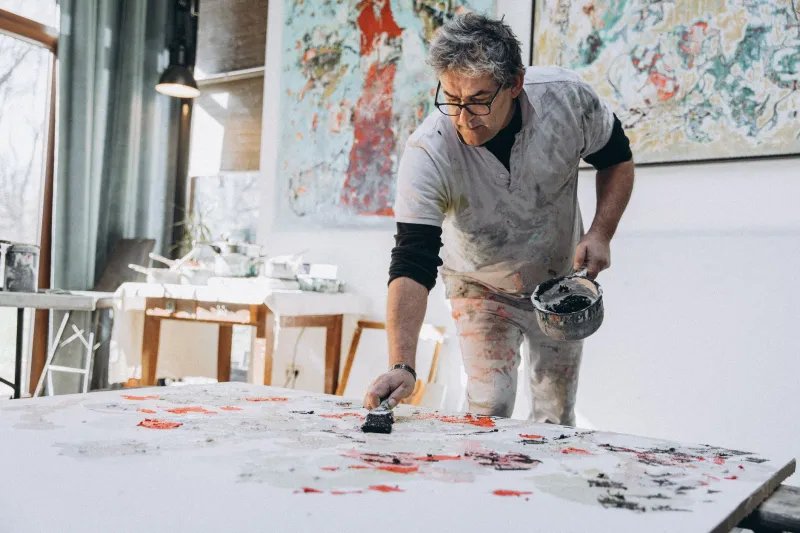
We've built this cultural mythology around the lone genius. The writer in the cabin. The painter in the studio at 2 a.m. There's something seductive about that image — the idea that great work comes from a single, uncompromised vision.
But spend enough time actually working that way, and you start to notice the cracks. Your blind spots don't get challenged. Your worst habits go unchecked. You get attached to ideas that aren't serving the work just because they're yours. I've held onto entire scenes, entire concepts, entire aesthetic directions way past their expiration date simply because I didn't have anyone around to say, "Hey, this isn't working."
Solitude protects the vision. It also calcifies it.
And beyond the craft stuff — there's just the human stuff. Making things is vulnerable. Doing it completely alone means carrying all of that vulnerability by yourself, with no one to share the weight when the project starts to feel impossible. That's a lot.
What Actually Happens When You Let Someone In
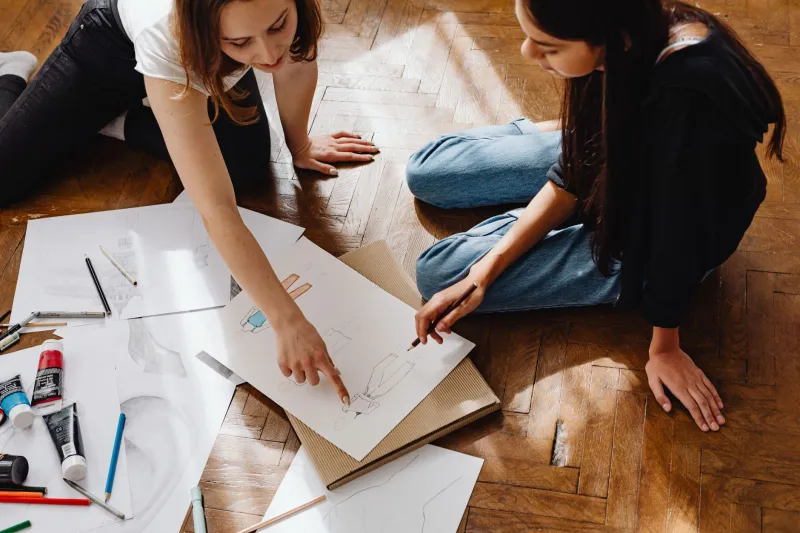
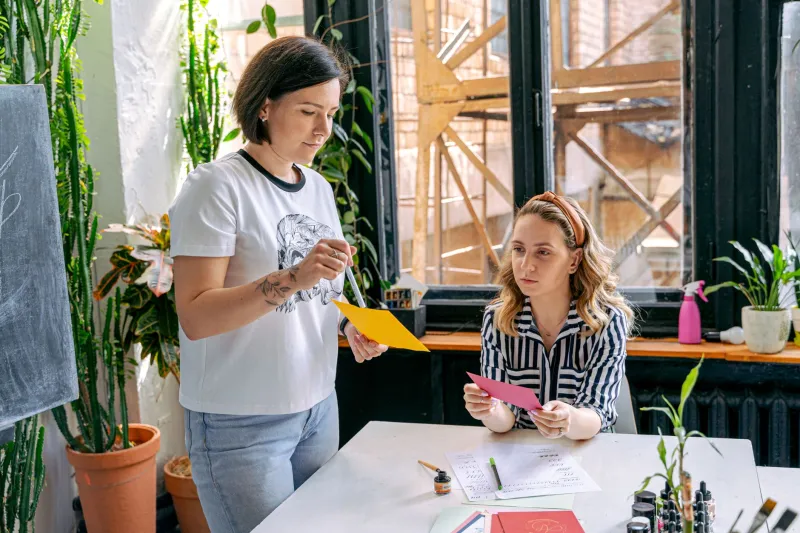
So you bring in a collaborator. Maybe it's a co-writer, a creative director, a photographer you've admired from afar, a friend who just gets it. And for a minute, it feels electric. New energy, new ideas, the sense that something bigger than either of you could make alone is taking shape.
And then someone suggests changing something you love. Or you realize your instincts are pulling in completely opposite directions on something that actually matters. Or the timeline gets complicated because two people's lives are now tangled up in one project.
Suddenly the loneliness of working alone starts looking a lot more appealing.
This isn't a failure of collaboration — it's just what collaboration actually is. The friction isn't a bug; it's the whole feature. But that doesn't make it easy to sit in, especially when your creative identity is tied up in having a particular point of view.
I've had collaborations that cracked a project wide open in ways I never could have managed solo. I've also had ones where I spent more energy negotiating than creating, and walked away feeling like the final product belonged to neither of us. Both outcomes came from the same starting point: two people who cared a lot about what they were making.
The Real Question Isn't Whether to Collaborate — It's How
Here's the framework I've landed on after enough trial and error to fill a very humbling journal:
Know what's non-negotiable before you start. Not everything in a project carries equal weight. Some things are load-bearing walls — touch them and the whole structure changes. Other things are furniture — moveable, replaceable, not worth a standoff. Get clear on which is which before you invite someone into the space. If you can't articulate what you'd fight for, you'll end up fighting for everything, or nothing.
Collaboration works best when the roles are clear. The projects that have gone sideways for me almost always involved two people who both thought they were the decision-maker. It's not about hierarchy for its own sake — it's about knowing who has final say on what. Even the most egalitarian creative partnerships need some structure, or you end up in a stalemate on every single choice.
Match the collaboration type to what the project actually needs. There's a difference between bringing in someone to challenge your thinking versus bringing in someone to execute a shared vision versus bringing in someone to fill a genuine skill gap you have. These are three completely different relationships, and treating them the same way is a recipe for resentment on both sides.
Give yourself permission to protect some work. Not everything needs a collaborator. Some projects are supposed to be just yours — messy, personal, uncompromised. Knowing that keeps you from either over-collaborating out of fear of loneliness or under-collaborating out of fear of losing control.
What You Actually Gain When You Get It Right
The best collaborations I've been part of didn't feel like compromise. They felt like discovery — like finding out that the thing I was trying to make was actually bigger than what I could see from where I was standing.
That's the version of collaboration that's worth the discomfort. When someone else's presence doesn't dilute your vision but expands it. When the friction produces something neither of you would have landed on alone. When the project ends and you genuinely can't separate whose idea was whose, because it all just became the thing.
That doesn't happen by accident. It happens when both people are more committed to the work than to being right about the work. Which is, honestly, harder than it sounds.
Sitting With the Paradox
I don't think the tension between independence and collaboration ever fully resolves — and I'm not sure it's supposed to. The loneliness of solo work keeps you honest about what you actually want to make. The friction of collaboration keeps you from disappearing into your own echo chamber.
The creators I admire most seem to move fluidly between both modes. They know when they need the quiet and when they need another voice in the room. They've built enough self-awareness to tell the difference between productive solitude and just hiding, between generative collaboration and just people-pleasing.
That's the skill worth developing. Not choosing one mode over the other — learning to read what the work needs, and being honest enough with yourself to give it that, even when it's uncomfortable.
And sometimes, the most creative thing you can do is pick up the phone and call someone. Or close the door and be alone with it for a little while longer. The art will usually tell you which one, if you're paying attention.