Too Many Cooks, One Canvas: How Chasing Everyone's Opinion Is Slowly Killing Your Art
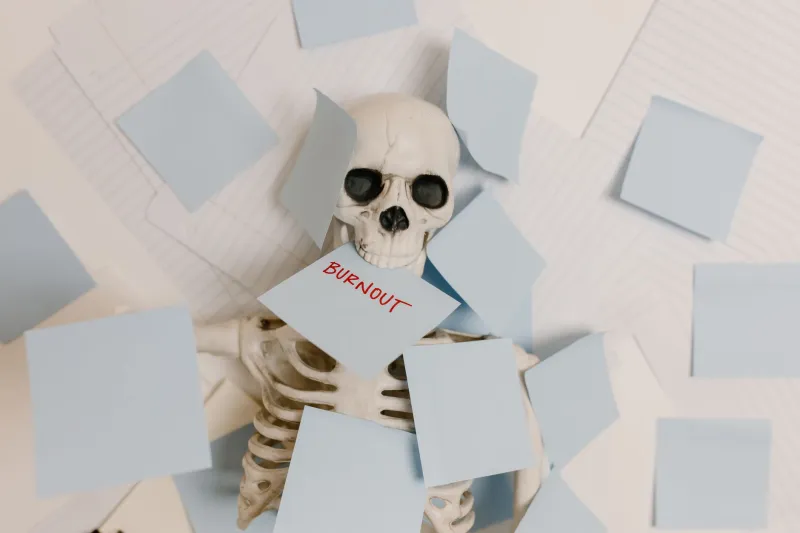
There's a particular kind of creative paralysis that doesn't look like paralysis at all. It looks like productivity. It looks like humility. It looks like a creator who is doing the work — posting drafts, soliciting feedback, revising, revising again, then revising the revision. From the outside, it seems like diligence. From the inside, it feels like slowly dissolving.
This is the feedback trap. And if you make anything — films, music, writing, visual art, content — there's a decent chance you've already fallen into it.
The Age of Infinite Input
We live in a moment that has made feedback easier to gather than ever before. Post a reel and 200 people will tell you what they think before lunch. Share a draft in a Discord server and you'll have twelve conflicting opinions before dinner. Run a poll on your Instagram stories and your audience will literally vote on your creative decisions like it's a season finale elimination round.
None of this is inherently bad. Community, collaboration, and honest critique have always been part of how great art gets made. The problem isn't the volume of feedback available — it's the assumption that more input automatically leads to better output.
Because here's the thing nobody tells you: feedback is only as useful as its source is relevant. And when you start treating all opinions as equally weighted, you're not refining your vision. You're auctioning it off, piece by piece.
What Happens When You Try to Please Everyone
There's a well-documented psychological phenomenon called decision fatigue, and it hits creators particularly hard when they're fielding contradictory notes. Your film professor says your ending is too ambiguous. Your most engaged Instagram follower says it's the ambiguity that makes it. Your collaborator says the pacing is too slow. Your mom says it moved her to tears and she never cries.
Who do you listen to?
When you try to answer that question by accommodating everyone, something strange happens. The work starts to flatten. The rough edges that made it interesting get sanded down. The specific, idiosyncratic choices that gave it a point of view get replaced with safer, more palatable alternatives. You end up with something technically competent and emotionally inert — a piece of art that offends no one and moves no one.
Taylor Swift has talked openly about the period following Reputation when she felt like she'd spent years making creative decisions based on managing public perception rather than genuine artistic instinct. The music was good, but it wasn't fully hers. It took a deliberate withdrawal from that feedback loop — less social media, more private writing — to get back to the work that felt true. Folklore was what happened when she stopped listening to the noise.
That's not a coincidence.
Distinguishing Signal from Static
The goal isn't to become impervious to outside input. Isolation isn't the answer, and a creator who genuinely cannot hear any criticism is just as stuck as one who hears too much of it. The goal is to build a framework for filtering — to get good at telling the difference between feedback that sharpens your vision and feedback that blurs it.
Here's a rough breakdown that actually works:
Ask: Does this person understand what I'm trying to make? This sounds obvious, but it gets skipped constantly. If someone is critiquing your experimental short film using the language of a Marvel blockbuster, their notes aren't wrong — they're just aimed at a different target. Feedback is only useful in context. Before you weight someone's opinion, make sure they've understood the assignment.
Ask: Is this feedback about craft, or about taste? Craft-based feedback — pacing is off, the transition here is jarring, this line doesn't track — is almost always worth considering, regardless of who it comes from. Taste-based feedback — I don't like this genre, this isn't my vibe, I prefer when you do X instead — is worth noting but not necessarily acting on. Know which one you're receiving.
Ask: Does this feedback make me want to dig deeper, or does it make me want to quit? This one's more intuitive, but it matters. Good feedback — even when it's hard to hear — usually comes with a spark of recognition. You might hate that someone pointed it out, but some part of you knows they're right. Feedback that just deflates you, that makes the work feel pointless, is often more about the critic's limitations than your own.
Building Your Real Creative Council
Every serious creator needs what I'd call a creative council — a small, intentional group of voices whose feedback you actually trust. Not because they always agree with you, but because they understand your work deeply enough to push it forward rather than sideways.
This group is usually tiny. Two people. Maybe five. It almost never includes your entire following, your extended family, or the comment section. It includes people who have demonstrated, over time, that they get what you're going for — even when they're telling you it's not working yet.
Director Ava DuVernay has talked about the importance of having a trusted inner circle that she consults throughout her creative process — people who know her vision well enough to tell her when she's drifting from it. That kind of feedback is genuinely generative. It doesn't dilute the work; it concentrates it.
The rest of the noise? You can hear it. You can even learn from it occasionally. But you don't have to let it drive.
Reclaiming the Work
If you've been in the feedback trap for a while, getting out of it requires something that feels counterintuitive: you have to make something you're not going to show anyone for a while. Not forever. Just long enough to remember what your instincts actually sound like without twelve other voices layered on top of them.
This isn't about ego or refusing to grow. It's about re-establishing the source signal before you start layering in the edits. You can't filter feedback well if you've forgotten what you were originally trying to say.
The art that tends to last — the stuff that finds its audience and stays there — is almost always the work that came from a clear, specific, personal place. It's not the work that was optimized for the widest possible approval. It's the work that was true to something, even when that something was weird or niche or hard to explain.
Listening to everyone, in the end, is just another way of not listening to yourself. And that's the one voice your work can't afford to lose.