Nobody Wants to See the Highlight Reel Anymore — Show Them the Rough Draft
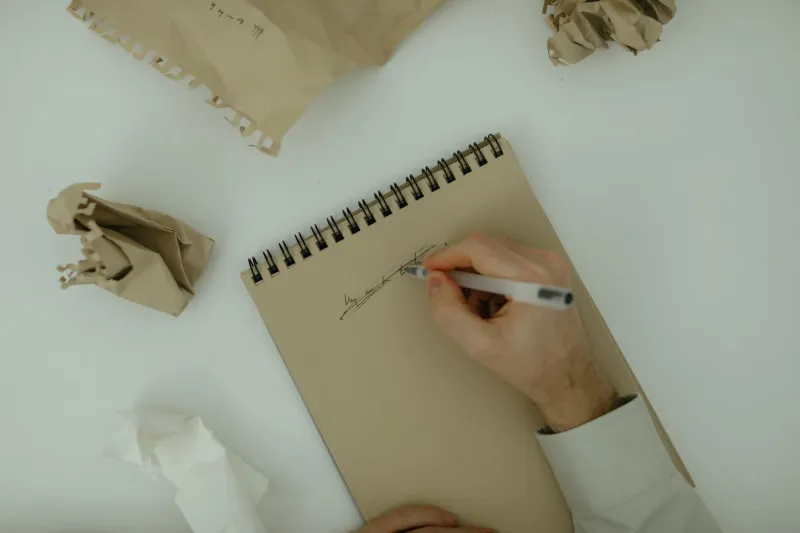
There's a particular kind of pressure that comes with sharing creative work online. You want to wait until it's ready. Until the lighting is right, the caption is clever, and the piece feels worthy of being seen. So you sit on the half-finished painting, the draft that still needs three more passes, the song that almost works. And then you post the final thing — clean, composed, complete — and wait.
And sometimes? It lands flat.
Meanwhile, someone else posts a blurry photo of their sketchbook at 11pm with a caption like "I've redrawn this hand six times and I still hate it" — and the comments explode.
This isn't an accident. And it's not just a social media algorithm quirk. Something real is happening here, and if you're a creator trying to build a genuine audience in 2024, it's worth paying close attention.
The Finished Product Is the Destination. The Process Is the Story.
We've been conditioned to think that the work is the thing. The film, the illustration, the novel, the album — that's what people are here for. And sure, the work matters. But here's what gets lost in that framing: finished products are everywhere. The internet is absolutely drowning in finished products.
What's actually rare — and therefore genuinely valuable — is watching something become.
Think about the creators you follow most loyally. Not the ones whose feeds look like a beautifully curated gallery, but the ones you feel like you know. Chances are, you've seen them struggle. You've watched them abandon an idea and start over. You've seen the version that didn't work. That's not incidental to your connection with them — it is the connection.
The rough draft isn't a liability. It's the most honest thing you can share.
Why Struggle Builds Trust (And Perfection Keeps People at Arm's Length)
There's a psychological reason audiences respond so strongly to behind-the-scenes creative content. When someone shows you only their wins, your brain registers them as fundamentally different from you — talented in some way you aren't, operating at a level you can't access. It's impressive, but it's also a little alienating.
But when a creator shows you the moment they almost gave up? When they post the version that looks nothing like the vision in their head? When they admit they've been stuck on the same paragraph for two weeks? Suddenly you're not watching someone from a distance. You're sitting next to them.
Authenticity has become one of the most overused words in the creator space, but strip away the buzzword and the thing underneath it is simple: people trust people who are willing to be seen imperfectly. In an era where AI can generate a flawless image in seconds and anyone can produce a slick-looking video with a decent phone, the messy, human, error-prone process is actually a differentiator.
Your struggle is your proof of personhood. Don't hide it.
The Strategic Case for Documenting the Mess
Beyond the emotional resonance, there's a genuinely practical argument for showing your creative process — especially if you're trying to build something sustainable.
When you only share finished work, you're essentially showing up to a party, dropping something on the table, and leaving. There's no ongoing story. No reason for someone to keep coming back between releases. But when you document the journey — the iteration, the dead ends, the small breakthroughs — you're giving your audience something to follow. You're creating narrative momentum.
This matters a lot for independent creators who don't have a label, a publisher, or a studio pushing their work. You are the marketing department. And the most compelling marketing for creative work isn't an ad — it's a story people can follow in real time.
Some practical ways to do this without it feeling forced:
- Narrate the decision points. When you choose one direction over another, explain why. What did you almost do? What made you change course? These micro-decisions are fascinating to people who care about craft.
- Post the discard pile. The sketch that didn't make it. The opening line you cut. The color palette you tried and abandoned. These aren't failures — they're evidence of taste and intention.
- Be specific about frustration. Vague posts about feeling creatively blocked are relatable but forgettable. Specific posts — "I've written this scene four different ways and every version feels too on-the-nose" — give people something to actually engage with.
- Time-stamp your progress. Even a simple before/after or a series of dated updates on a long project creates a sense of investment for your audience. They've been with you through the hard part. They want to see how it ends.
The Fear Underneath the Polish
Let's be honest about why most of us don't show the rough draft: it's terrifying. There's a very real vulnerability in letting people see work that isn't finished, ideas that might not pan out, and creative decisions you're not sure about yet.
What if they think it's bad? What if they judge the process more harshly than they'd judge the finished piece? What if showing the struggle makes you look like you don't know what you're doing?
These fears are completely understandable. But they're also worth examining, because they're usually rooted in the belief that your value as a creator is tied to how effortless your work appears. And that's just not true — not to the audiences who actually matter, and not in the long run.
The creators who build the deepest, most durable connections with their audiences are almost always the ones who figured out that being seen in the middle of something is more powerful than only being seen at the finish line.
Your Process Is Part of the Work
At its core, this is really about redefining what "the work" even means. If you're a creative person building something over time — whether that's a body of art, a body of writing, a music catalog, a film portfolio — the process isn't separate from the work. It is the work. It's the ongoing, living, breathing story of a person making things.
And that story, told honestly and with some regularity, is what turns a casual follower into someone who genuinely cares what you make next.
So post the rough draft. Show the six redrawn hands. Let people see the version that almost was. The mess isn't what you're hiding until the work is done — it's the most interesting part of the whole thing.