The Messy Middle Is the Message: Why Imperfect Work Hits Harder Than the Final Cut
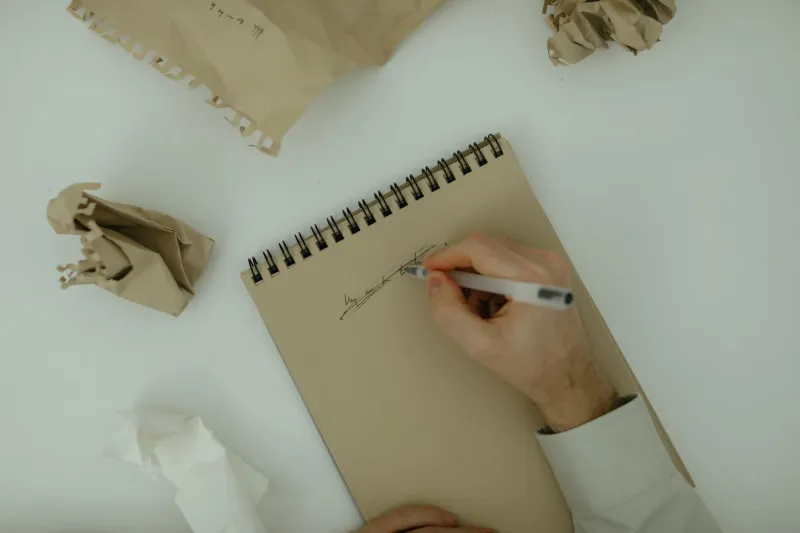
There's a specific kind of anxiety that lives in the space between starting something and finishing it. Every creator knows it. The half-written song. The canvas that's been sitting in the corner for three weeks. The screenplay that's technically in progress but mostly just haunting you from a Google Doc. For most of our creative lives, we've been told to keep that stuff private — to only show the world what's ready, what's polished, what's done.
But something is shifting. And honestly? It's kind of beautiful.
Audiences right now aren't just tolerating unfinished work — they're gravitating toward it. They're subscribing to newsletters about creative blocks, watching YouTube videos of artists painting over their own mistakes, and following TikTok accounts where the whole premise is "I have no idea if this is going to work." The incomplete, the evolving, the openly uncertain — that's where some of the most genuine connection is happening in creative spaces today.
So what's actually going on here?
Perfectionism Was Never Really About Quality
Let's call perfectionism what it is: a fear response dressed up in productivity language. When we obsessively refine something before letting anyone near it, we're not just chasing quality — we're building a wall. If no one sees the rough draft, no one can tell us it's not good enough. It's a protective instinct, and it makes complete psychological sense.
But here's the paradox: that same wall that protects us from criticism also keeps out connection.
Dr. Brené Brown's research on vulnerability has been circulating in creative communities for over a decade now, and for good reason — it maps almost perfectly onto what's happening in the creator space. The willingness to be seen in a state of uncertainty is, counterintuitively, what makes people trust you. Not the flawless Instagram grid. Not the perfectly edited portfolio. The moment where you say, "I'm figuring this out in real time, and I'm letting you watch."
That's the thing audiences are hungry for. Not failure for failure's sake, but honesty about the process.
What Artists Who Share the Process Are Actually Building
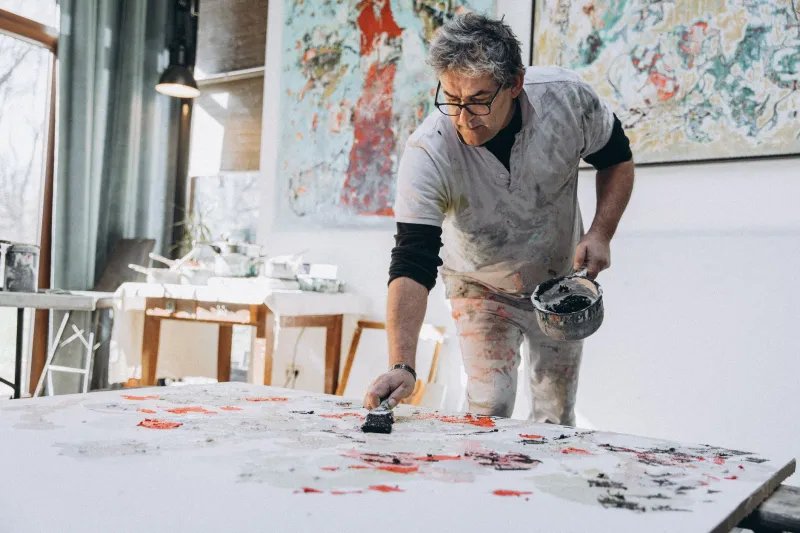
Take illustrator and muralist Gina Florio, who spent years only posting finished pieces to her social channels before an offhand decision to share a "work in progress" story on Instagram changed everything. The engagement was unlike anything she'd seen. People weren't just liking it — they were asking questions, sending voice memos, sharing their own half-finished projects in her DMs.
"I think people assumed I just sat down and made perfect things," she said in a recent interview. "When they saw me struggling with a section of color for like two hours, something clicked for them. They felt like they could actually talk to me."
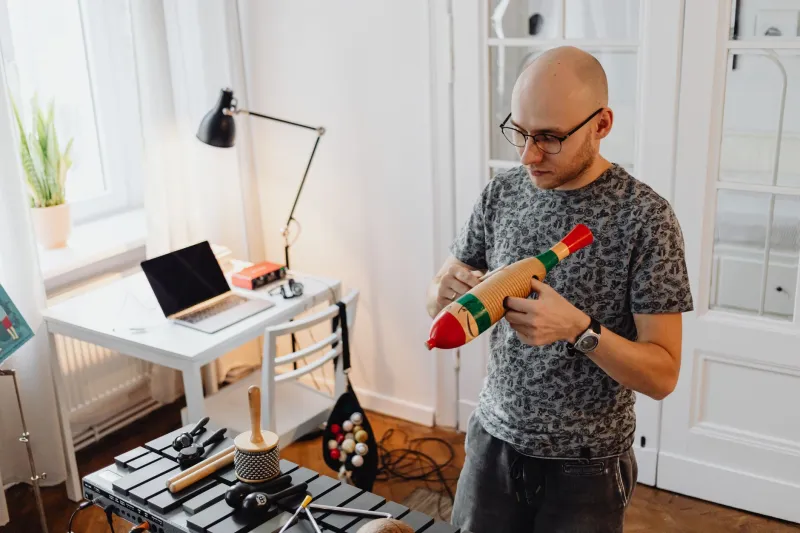
That's not an anomaly. Musicians who post demo recordings with scratch vocals consistently report higher emotional engagement than when they drop final mixes. Writers who share early chapter drafts — messy dialogue, placeholder scenes and all — build readerships that feel almost like reading groups before the book even exists. The audience isn't just consuming; they're participating in the creative journey.
And participation? That's a completely different kind of loyalty than admiration.
The Psychology Behind Loving the Unfinished Thing
There's actually a name for part of this: the Zeigarnik effect. It's a psychological phenomenon where people remember uncompleted or interrupted tasks better than completed ones. Our brains are literally wired to stay engaged with things that haven't resolved yet. When you share work in progress, you're not just being vulnerable — you're creating a cognitive hook that keeps your audience thinking about you between posts.
Beyond that, there's something about imperfection that signals authenticity in a way that polish simply can't. We've all become fluent in the visual language of "produced content." We know what a stock photo looks like. We can feel when something has been through seventeen rounds of editing. And while that level of craft has its place, it also creates distance — a subtle but real sense that you're watching a performance rather than meeting a person.
The rough draft collapses that distance. A smudge on a canvas, a lyric that's clearly still being worked out, a paragraph that ends with "[NEED TO FIX THIS TRANSITION]" — these aren't signs of sloppiness. They're proof that a real human being made this. And in 2024, that proof is increasingly rare and therefore increasingly valuable.
But There's a Line, and It Matters
None of this is an argument for abandoning craft or using "authenticity" as an excuse to be sloppy. There's a meaningful difference between sharing your process and simply not finishing things. The artists who do this well are still deeply invested in quality — they're just willing to let people see the kitchen while the meal is being made.
They're also intentional about what they share. Not every struggle needs to be public. Not every bad draft deserves an audience. The most effective version of this isn't trauma-dumping your creative anxiety onto your followers — it's curating the honest moments that actually illuminate something about the work and the process behind it.
Think of it as the difference between a behind-the-scenes documentary and a security camera feed. Both show you what's happening. Only one tells a story.
What This Means for Your Own Practice
If you're a creator sitting on half-finished projects because they don't feel ready — consider that the "not ready" might be exactly the point. Not every piece of work needs to debut as a finished artifact. Sometimes the most honest thing you can share is the thing you're still figuring out.
Start small. Post a photo of your workspace mid-project. Share a voice memo of a melody that's only half there. Write a newsletter about what you're struggling with in your current piece. You don't have to manufacture drama or perform vulnerability — just lower the threshold for what counts as worth sharing.
The audience that finds you through your rough drafts will be different from the audience that finds you through your highlights. They'll be more patient, more engaged, and more likely to stick around when the finished work finally arrives — because they'll feel like they helped bring it into the world.
And maybe that's the real art here. Not the painting, not the song, not the film — but the space between the idea and the thing itself. The messy, uncertain, deeply human middle.
That space? Your audience is already listening. You just have to let them in.