What Grows in the Gap: Notes on the Silence Between Finished Things
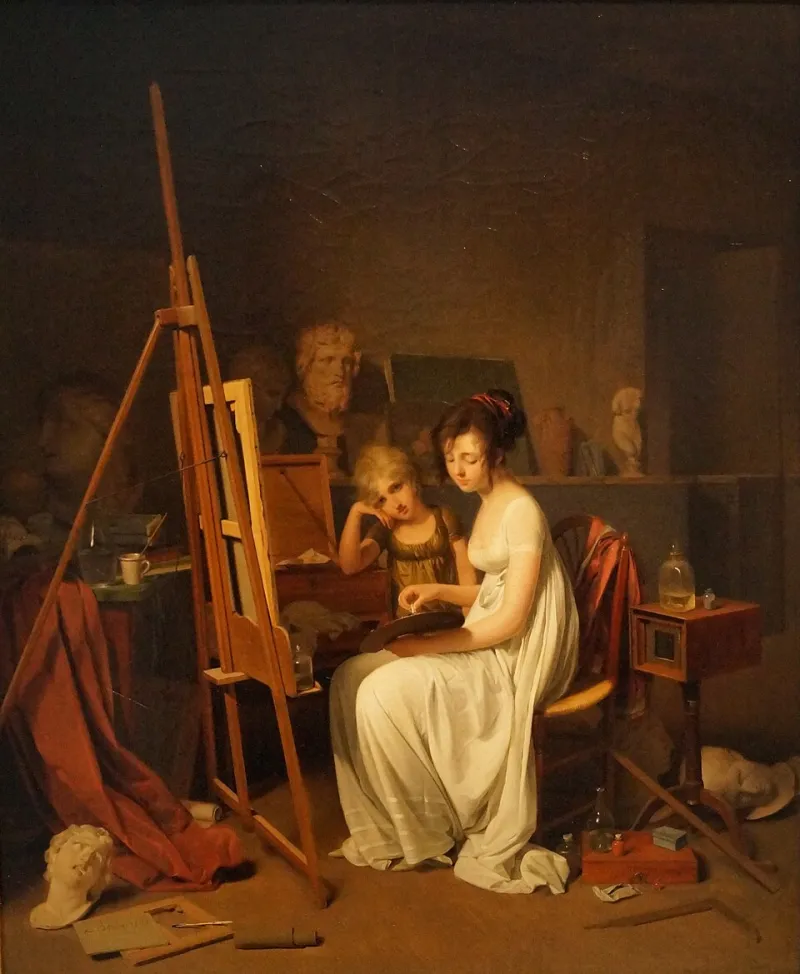
Photo: Louis-Léopold Boilly, Public domain, via Wikimedia Commons
There's a specific kind of quiet that arrives the week after you finish something. The file is exported, the thing is out, and your calendar — a wall of deadlines two days ago — is suddenly just a calendar.
Most of us panic in that quiet. We read it as evidence that momentum is leaking, that someone else has posted three things since Tuesday, that the silence itself is a verdict. So we fill it. We start a project we don't care about, or sign up for a course, or rebuild the website for the fourth time. Anything to avoid the sensation of standing still.
I've done this enough times to recognize the pattern, and I've started to believe the panic has it backwards. That stretch of nothing isn't the failure state of a creative life. It's a load-bearing part of it.
Fallow ground is not empty ground
Farmers have a word for this: fallow. You take a field out of rotation on purpose. Nothing gets planted. Left alone, the field rebuilds what the last three harvests spent. The entire point is that it looks like nothing is happening.
Creative work runs on roughly the same chemistry. The project you just finished drew something out of you — attention, conviction, a certain naive enthusiasm you can only spend once per idea. Plant immediately and you're planting in depleted soil, then wondering why the new thing feels thin and oddly similar to the old one.
The gap is where the next voice gets assembled, and it doesn't happen on a schedule. It accumulates from the book you read without taking notes, the movie you watched at 11 p.m. with your phone face down, the long conversation with a friend who has no idea what you do for a living. None of it feels like work because it isn't work. It's intake.
Defend the calendar you just cleared
The only real discipline here is protecting the white space, not scheduling it. Three things that help:
Don't announce the next thing for two weeks. The moment you tell someone what you're making next, you've handed them a progress bar to watch. Give the idea a few weeks of being nobody's business.
Keep a low-stakes notebook. Not an idea tracker with columns and color-coding. A place to write down a sentence you overheard, an image that stuck, a question you can't answer yet. No outlines. Outlines are how the gap becomes a job.
Say no to the quick favor. The two-day project that "won't take long" always lands in the gap, because the gap is the only unclaimed time on your calendar. Protect it like you'd protect a shoot day.
Mine it without strip-mining it
There's a real difference between harvesting the gap and turning it into a content mine. Harvesting means noticing what keeps surfacing. Strip-mining means opening a document titled Next Project Ideas on day two and forcing the fallow weeks to produce a deliverable.
A workable middle: collect fragments freely, resist assembling them. Let three weeks pass before you look at the notebook again. If a thread is real, it'll still be there. If it was just anxiety looking for a task, it will have quietly dissolved — which is useful information too.
The trap of optimizing your rest
At some point someone with a newsletter will suggest you systematize your downtime. Track your recovery. Optimize the off-season. Build a personal operating system for the space between projects.
This is a trap dressed as ambition. A rest project with a deadline is not rest — it's a job with worse pay and a crueler manager. If you find yourself logging fallow weeks in a habit app and grading them, you've turned the last genuinely unmeasured part of your creative life into another dashboard.
The gap is one of the few places left where you're allowed to be unproductive without explaining yourself. That's not laziness. That's infrastructure.
What the silence is actually for
Here's the thing nobody tells you about voice: it doesn't develop while you're producing. It develops in the intervals, when the last thing is far enough away to be looked at honestly and the next thing hasn't arrived to defend itself yet.
That's the space between — the part of this whole enterprise that doesn't fit in a portfolio, a feed, or a case study. It's also where the interesting decisions get made: what you actually believe, what you're tired of, what you want to try that would embarrass the version of you who made the last thing.
So if you finished something recently and the calendar is blank and your hands are restless — try six weeks. Not as a cleanse, not as a content experiment. Just leave the field alone and see what volunteers.
Something usually does. It's just quieter than the last thing, which is precisely why it needs the room.