You Can't Perform Realness Without Knowing It's a Performance
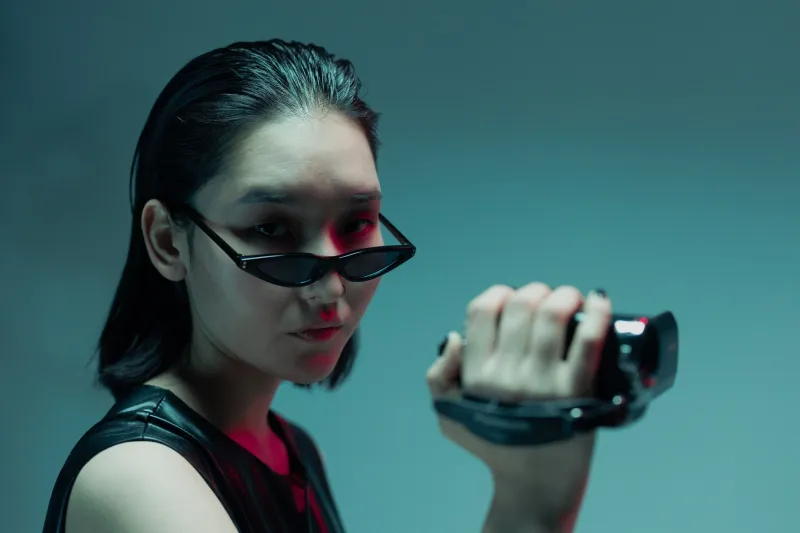
There's a particular kind of content that stops your thumb mid-scroll. Someone is sitting in their car, eyes a little red, voice slightly unsteady, talking directly into the camera like they forgot the whole internet was watching. It feels intimate. It feels true. And nine times out of ten, it was filmed, reconsidered, maybe re-filmed, and posted at a time calculated to hit peak engagement.
None of that makes it fake, exactly. But it does make it complicated.
We're living through a cultural moment where vulnerability has become currency — and like any currency, the moment enough people start trading in it, you have to wonder what's backing it up.
When 'Raw' Became a Brand Strategy
The shift happened gradually, then all at once. As the early-2010s Instagram aesthetic of perfect lattes and sun-drenched vacations started feeling hollow, a counter-movement emerged. Creators began leaning into mess — sharing mental health struggles, failed relationships, financial stress, creative burnout. Audiences responded. Engagement spiked. Algorithms rewarded it.
And just like that, vulnerability became a content category.
This isn't a cynical observation — it's a structural one. The platforms we use are built to reward disclosure. The more you share, the more data gets collected, the more targeted the ads, the more the algorithm understands what keeps people watching. Your emotional openness isn't just meaningful to your audience; it's useful to a system that profits from your attention.
So when a creator sits down to decide what to share, they're not just asking what feels true? They're also — consciously or not — asking what will land? Those two questions don't always have the same answer.
The Curation Inside the Candor
Here's the thing nobody really talks about: even the most unfiltered content involves choices. Which angle. Which lighting. Whether to post the first take or the fourth. Whether to share the breakdown or wait until you've processed it enough to frame it with a lesson. Whether to include the part where you said something that might make people uncomfortable.
Every act of documentation is an act of editing. And editing, by definition, is curation.
Psychologists call this meta-cognition — the experience of watching yourself think. When you know your moment is being recorded, something shifts. You become simultaneously the person living the experience and the person shaping how it will be received. That split doesn't mean you're lying. But it does mean you're no longer fully inside the experience.
Some creators describe this as a kind of dissociation — a feeling of floating slightly above their own lives, narrating in real time. It can start to affect how you process things off-camera too. When every hard moment becomes potential content, you stop just feeling it. You start filing it.
The Psychological Weight of Deciding What's Real Enough
If the old pressure was to appear perfect, the new pressure is to appear appropriately imperfect. Too polished and you're out of touch. Too messy and you're oversharing. The window of acceptable vulnerability is narrower than it looks, and it shifts depending on your platform, your audience, and what's trending that week.
This creates a specific kind of anxiety that doesn't have a great name yet. It's not quite impostor syndrome, and it's not quite burnout. It's more like... a constant low-grade audition. You're always evaluating your own authenticity, which is maybe the most ironic thing a person can do.
And when your livelihood depends on that performance — when your audience expects a certain kind of access, and your income reflects it — the stakes get even higher. Pulling back starts to feel like a betrayal. Sharing starts to feel like exposure. There's no neutral ground.
Can True Vulnerability Exist When Someone's Watching?
This is the question that actually keeps me up at night, honestly.
There's a version of vulnerability that's transformative — the kind you experience in a therapist's office, or at 2 a.m. with someone you trust completely, or in the private pages of a journal nobody will ever read. That vulnerability doesn't perform. It doesn't anticipate a response. It just is.
The moment you introduce an audience, something changes. Not everything changes — plenty of creators have shared genuinely difficult things online and found real connection, real community, real healing. The comments section can be a surprisingly human place sometimes. But the dynamic is different. There's always a layer of translation happening between what you feel and what you post.
Maybe the answer isn't to stop sharing. Maybe it's to stop pretending that sharing is the same as being seen.
What Comes After Authentic
Some creators are starting to push back against the authenticity industrial complex in quiet ways. Posting less. Keeping certain parts of their lives genuinely private — not as a strategy, but as an act of self-preservation. Letting some things be unnarrated.
There's something almost radical about that right now. Choosing not to document a hard moment. Letting a creative struggle stay between you and the work. Deciding that some things lose something essential when they're turned into content.
None of this means you should stop being honest online. Honesty still matters. Connection still matters. Sharing your creative process, your doubts, your weird 3 a.m. thoughts — that stuff can be genuinely meaningful, both for you and for whoever's on the other end.
But maybe the most real thing you can do is acknowledge the performance. Not apologize for it. Just see it clearly. You're a person making choices about what to share, within a system that has opinions about those choices. That's not a failure of authenticity. That's just the actual situation.
And knowing the situation — really knowing it — might be the closest thing to real we've got.