The Folders You Never Open: Giving Orphaned Projects a Place to Live
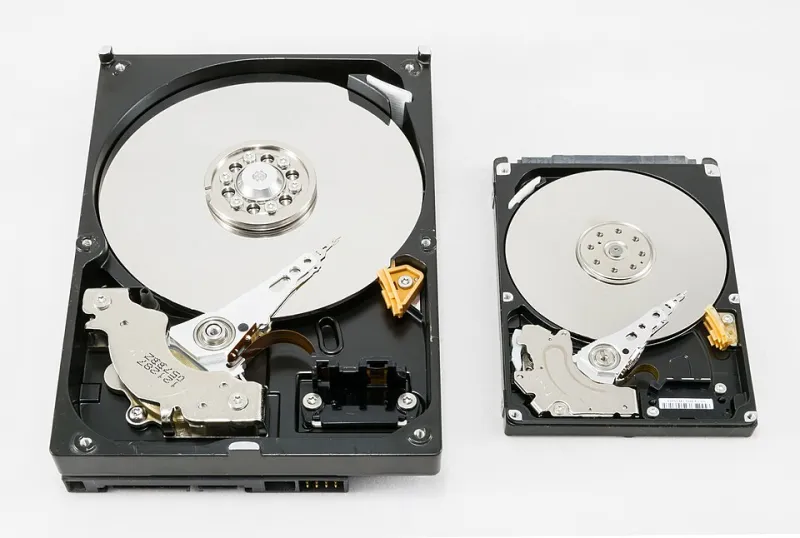
Photo: Jacek Halicki, CC BY-SA 4.0, via Wikimedia Commons
Every maker eventually owns a hard drive with a folder that could be called OLD_DO_NOT_OPEN. Mine has been through three laptop migrations and survived them all, which is more than I can say for some of my actual plans.
Inside: a twelve-minute short that never got color corrected. Eight months of documentary footage shot on a subject who moved to another state and stopped answering texts. Three episodes of a web series that exists entirely on Vimeo with a password I've forgotten. A wedding-adjacent video I'm weirdly proud of and never mention.
None of it belongs on a portfolio. All of it is mine.
Why the portfolio keeps rejecting them
A portfolio is an argument. It's not a filing cabinet — it's a sentence with supporting clauses, and every piece in it has to earn its spot by making the case stronger.
That's not cruelty, it's editing. The mistake is assuming that work the argument can't hold is work without value. Most of the time, the opposite is true: the orphaned project is where the interesting risk lived, the one that couldn't be justified in a client meeting.
So what do you do with it? There are four honest answers, and none of them involve pretending it didn't happen.
Path one: the archive, in three flavors
Public. A small page called Experiments and Abandoned Things, linked from the footer rather than the main menu. Context does the work here — a sentence like shot over two weekends in 2021, never finished, still fond of it reframes the piece from failed product to field note. Audiences are far more forgiving of unfinished work than we assume.
Unlisted. A password-protected folder you send to the six people who actually ask. Nothing is broken about this. Most work deserves an audience of six.
Private. A backed-up drive, labeled, left alone. This is a legitimate choice and not the same as giving up. Naming the folder something other than OLD_DO_NOT_OPEN helps — Previous Chapter does more for your head than you'd think.
Path two: release the parts, retire the container
Most orphaned projects aren't dead. They're raw material wearing the costume of a finished thing.
The short becomes a single scene in something longer. The documentary's B-roll becomes a texture reel you license or use as a mood piece. The abandoned web series becomes a writing sample that gets you a meeting two years later. The question worth asking is not can I finish this? but what's the one asset inside this that still works on its own?
Answer that, extract it, and let the container go. A lot of creative blockage is just reluctance to break something we once called a project.
Path three: the pseudonym
Here's a common shape. Your public work is intimate, polished, personal — and you also want to make genre shorts, or strange little experiments, or a horror thing with bad lighting and fake blood. Putting that next to the polished work feels like a confession.
So make a side door. A separate name, a separate page, no cross-linking, no expectations. Rules: keep it simple, don't pretend to be someone else, and don't expect it to feed the main thing. It isn't a second house. It's a place to be bad in public without spending your reputation to do it.
Path four: no home at all
Some work exists to teach you a craft and then stop. It doesn't need a page, a reel, or a rollout.
The pressure to publish or monetize every artifact is a recent development and not obviously a wise one. A project can be tuition. You paid it, you learned the lens or the edit or the limits of your own patience, and now you're allowed to close the folder and say thank you.
How to decide in about ten minutes
Three questions, one for each piece:
- Does it stand on its own without an apology? If it only works prefaced by sixteen caveats, it's an archive piece, not a portfolio piece.
- Would you be comfortable with the person who hires you next seeing it? If yes, the public archive is fine. If no, unlisted.
- Is there something inside it you could use elsewhere? If yes, extract it first, then decide about the rest.
No, no, no — private archive. Yes, no, no — public archive with context. No, no, yes — repurpose and retire. Clear answers, no agonizing.
What the orphans are trying to tell you
Do one more thing before you close the drive. Scroll the folder and look for the pattern.
What do these misfits have in common? The subjects you kept returning to, the technique you tried repeatedly, the tone you couldn't get out of your system? That recurring thing is almost always the leading edge of where your voice is going next — the part that doesn't fit yet because the rest of the argument hasn't caught up to it.
The work that doesn't fit your portfolio isn't the evidence against you. It's the rough draft of the next chapter, sitting there in a folder with a terrible name, waiting for you to be ready to read it.